Every car owner wants their vehicle to look pristine, but not every cleaning method treats your car the same way. For years, the traditional bucket-and-sponge wash has been the go-to method, while professional garages relied on high-pressure hoses. But times have changed. Foam car wash has emerged as the safest, most efficient, and most advanced way to clean vehicles. In this article, we’ll compare foam wash and traditional car wash methods, weigh their pros and cons, and show why foam technology stands out as the superior choice for modern car care.
The Traditional Car Wash Method
The bucket-and-sponge wash or even high-pressure manual washing has been around for decades. Here’s how it works:
-
A bucket of water mixed with detergent is used.
-
A sponge or cloth is dipped and rubbed across the car’s surface.
-
The vehicle is rinsed with clean water.
While this method is simple and familiar, it comes with several hidden drawbacks.
Pros of Traditional Car Wash
-
Low-cost and easy to do at home.
-
Requires minimal equipment.
-
Widely accessible.
Cons of Traditional Car Wash
-
High chance of scratches due to dirt particles trapped in sponges.
-
Consumes large amounts of water.
-
Uneven cleaning – hard-to-reach areas often stay dirty.
-
Time-consuming and tiring.
-
Harsh detergents may strip away wax or protective coatings.
Foam Car Wash: The Modern Solution
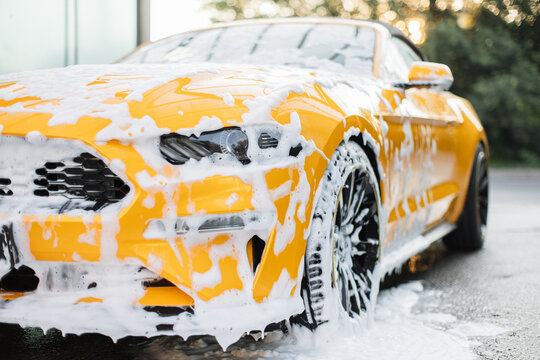
A foam wash involves covering the entire car with a thick layer of specially formulated foam using a foam cannon or foam gun. The foam clings to the surface, breaking down dirt and lifting particles before they are rinsed away.
Pros of Foam Wash
-
Scratch prevention: Foam encapsulates dirt, reducing direct friction.
-
Even coverage: The foam spreads evenly, cleaning every corner.
-
Eco-friendly: Uses significantly less water.
-
Gentle on paint: Specialized pH-balanced shampoos protect the car’s finish.
-
Faster cleaning: A foam wash cuts down on scrubbing time.
-
Professional finish: Leaves the car glossy and streak-free.
Cons of Foam Wash
-
Requires a foam gun or cannon (initial investment).
-
Slightly more technical to use compared to a bucket wash.
Foam vs. Traditional: A Direct Comparison
| Feature | Traditional Wash | Foam Wash |
|---|---|---|
| Water Usage | High (50–100 liters) | Low (15–30 liters) |
| Scratch Risk | Very High | Very Low |
| Time Taken | 40–60 minutes | 20–30 minutes |
| Finish Quality | Average, streaks possible | Glossy, professional-grade |
| Eco-Friendliness | Not eco-friendly | Water-saving and safe chemicals |
| Cost Over Time | Cheap at first, costly later (repairs, paint damage) | Cost-efficient with better paint life |
Why Foam Wash Wins
When it comes to protecting your car’s paint, saving water, and getting a professional-level shine at home, foam wash clearly outperforms the traditional method. While the old bucket wash may feel familiar, it comes with long-term costs – from scratches to faded paint. Foam wash, on the other hand, is the future of safe, smart, and eco-friendly car care.
Conclusion
Foam wash isn’t just a trend – it’s a revolution in car care. By investing in foam wash, car owners can save time, reduce water wastage, and most importantly, extend the life and beauty of their vehicle’s paint. For those who want to give their cars the best treatment, Hypro Car Care’s foam wash solutions are the way forward.