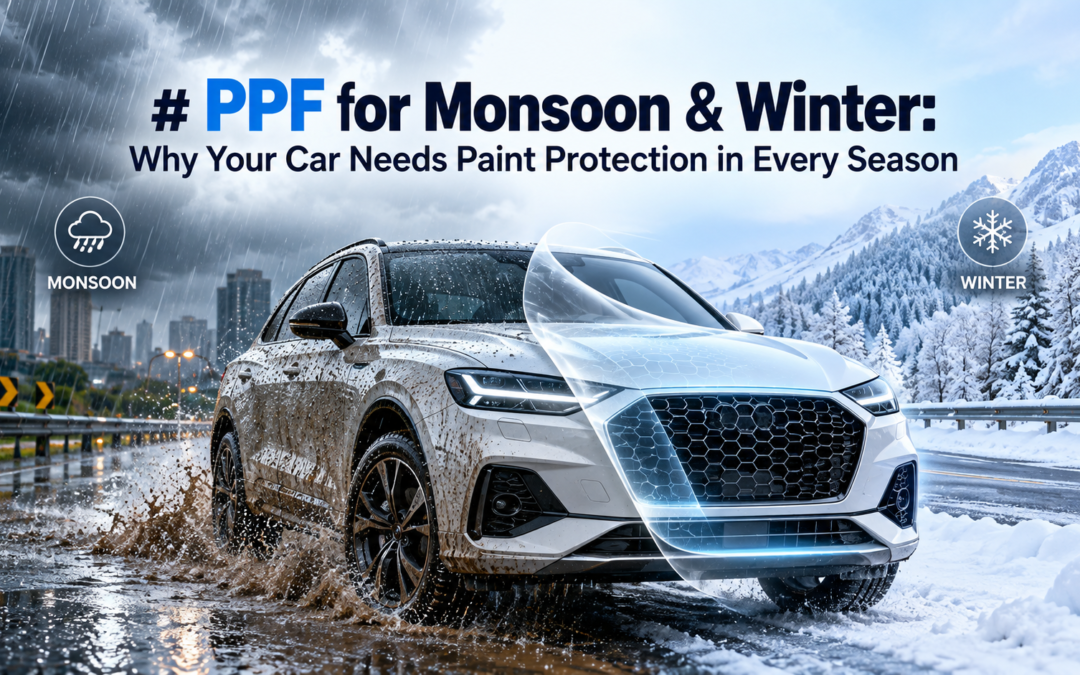
Your car’s paint faces different challenges throughout the year. While summer brings intense heat and UV exposure, the monsoon and winter seasons can create their own set of problems—from rainwater and road grime to moisture, dirt, and environmental contaminants.
This is where Paint Protection Film (PPF) can make a significant difference.
For car owners who want to maintain their vehicle’s original paint, PPF provides a durable protective layer that helps protect vulnerable painted surfaces from everyday road conditions.
Why Is Car Paint Vulnerable During Monsoon and Winter?
Rainy and winter conditions may seem less harmful than harsh summer weather, but your car is exposed to several contaminants every time you drive.
1. Rainwater and Road Contaminants
Rainwater can collect dust, dirt, oil residue and other contaminants from roads. When this mixture lands on your car and remains on the paint, it can contribute to surface contamination.
Driving during the monsoon also means greater exposure to muddy water, road spray and debris from other vehicles.
Regular washing helps, but adding a protective layer such as PPF for cars provides an additional barrier between these contaminants and the vehicle’s original paint.
2. Mud, Slush and Road Grime
Monsoon roads can become particularly messy. Mud and slush can accumulate around the front bumper, side skirts, wheel arches and lower sections of the vehicle.
These areas are especially vulnerable because they are constantly exposed to road debris.
Car PPF can be applied to high-impact areas to help protect the paint from everyday wear and tear.
3. Moisture and Environmental Contaminants
During winter, moisture and condensation can remain on the exterior of a vehicle for longer periods, particularly during colder mornings.
Although moisture itself does not necessarily damage modern automotive paint, contaminants sitting on a wet surface can make cleaning more difficult.
A properly installed paint protection film helps create a protective surface that makes routine maintenance easier.
How Does PPF Help During Monsoon?
PPF is a transparent film designed to protect a vehicle’s painted surfaces from various forms of everyday damage.
During the monsoon season, it can help protect areas such as:
-
Front bumper
-
Bonnet
-
Front fenders
-
ORVMs
-
Door edges
-
Side skirts
-
Headlight surfaces
-
Other high-impact painted areas
The film acts as a sacrificial layer, taking the impact of minor road hazards instead of the original paint.
What About Winter?
Winter driving brings a different combination of challenges.
Dust, moisture, road grime and frequent washing can all contribute to surface contamination. For vehicles that are driven regularly, maintaining the factory-finish appearance can become increasingly difficult.
A quality PPF installation provides an additional protective layer while helping preserve the appearance of the original paint.
This is particularly useful for owners of new cars who want to maintain their vehicle’s showroom-like finish for longer.
PPF vs. Wax or Ceramic Coating
Car owners often compare PPF with wax and ceramic coating. While all three can play a role in vehicle protection, they serve different purposes.
Wax primarily provides temporary protection and enhances gloss.
Ceramic coating provides a protective coating with hydrophobic properties and can make cleaning easier.
PPF is a physical film applied over the paint and is specifically designed to provide protection against physical road hazards such as minor stone chips, scratches and surface impacts.
For maximum protection, some car owners choose to combine PPF with ceramic coating, depending on their vehicle, driving conditions and maintenance preferences.
Is PPF Worth It for Indian Weather?
Indian roads expose vehicles to a combination of dust, traffic, road debris, rain, pollution and changing weather conditions.
If you drive regularly, travel on highways or own a new or premium vehicle, protecting high-impact areas can be a practical investment.
Instead of waiting for visible scratches, stone chips or paint damage to appear, installing PPF proactively can help preserve the original finish.
How to Maintain a Car with PPF During Monsoon & Winter
PPF does not eliminate the need for regular car care. Proper maintenance is important for keeping both the film and the vehicle looking their best.
Follow these basic practices:
-
Wash the car regularly to remove mud, dust and road contaminants.
-
Avoid aggressive scrubbing on the film.
-
Use automotive-safe cleaning products recommended for PPF.
-
Remove bird droppings and other contaminants promptly.
-
Avoid using harsh chemicals or abrasive materials.
-
Choose professional installation to ensure proper film application and edge finishing.
-
Inspect the film periodically for damage or lifting.
Protect Your Car Before the Season Gets Tough
Monsoon and winter are not reasons to stop enjoying your car. With the right protection and maintenance routine, you can continue driving while keeping the vehicle’s original paint looking its best.
Paint Protection Film is more than a cosmetic upgrade—it is a practical protective layer designed to help defend your car against everyday road conditions.
If you are considering PPF installation in India, consult a professional car care specialist to determine which areas of your vehicle require protection and which PPF solution is suitable for your car.
Protect the Paint. Preserve the Finish.
At Hypro Car Care, professional car protection solutions can help you maintain your vehicle’s appearance through changing weather conditions.
Whether you are preparing your new car for the monsoon or looking for better protection during winter driving, the right PPF solution can help keep your car looking newer for longer.